
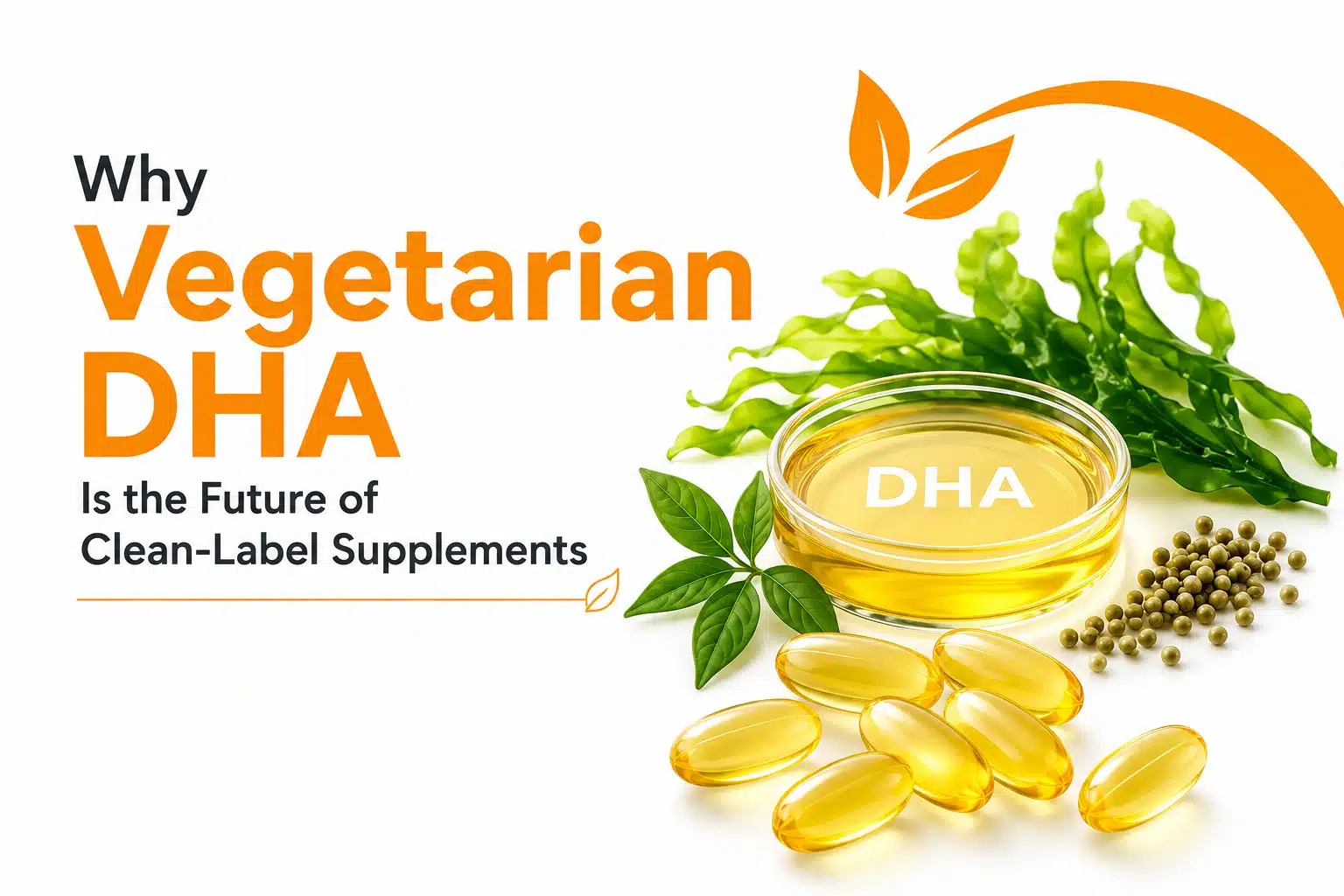
Vegetarian DHA is becoming an increasingly popular choice, moving from a niche ingredient to a key part of mainstream formulations. It meets three important needs that today’s supplement shoppers value most: being plant-based, having transparent ingredients, and earning consumer trust. For formulators, it’s one of the best options to provide a meaningful omega-3 without needing fish oil, gelatin capsules, or worries about marine contaminants.
What Makes Vegetarian DHA Different?
It Delivers Omega-3 Directly, Not Indirectly
DHA (docosahexaenoic acid) is a long-chain omega-3 fatty acid tied to brain, eye, and cellular membrane health. Most plant sources — flax, chia, walnut — provide omega-3 only as ALA, and the body converts ALA to DHA very inefficiently. Vegetarian DHA, sourced from algae, skips that bottleneck and supplies the active, usable form directly. That makes it especially relevant for plant-based consumers, pregnant women, and anyone seeking a genuinely complete omega-3 profile rather than a partial one.
It Matches How Consumers Already Shop
Vegan, vegetarian, and flexitarian diets are no longer a small segment — they’re a mainstream purchasing filter. A DHA source that satisfies that filter without compromising potency gives brands a way to serve this audience without building a separate, weaker product line.
Why Clean-Label Brands Are Making the Switch
It Sidesteps the Classic Fish Oil Complaints
Algal DHA is crafted from microalgae instead of fish, grown in safe, controlled environments that help limit exposure to marine contaminants sometimes linked to fish oil. This has the practical benefit of helping formulators steer clear of the fishy aftertaste, odours, and supply inconsistencies that marine-sourced omega-3s often face — all while keeping taste, aroma, and batch-to-batch quality dependable.
It’s an Easier Ingredient Story to Tell
Clean-label shoppers often prefer products with short, recognisable ingredient lists and familiar sources. Since algae is where DHA naturally originates in the marine food chain — fish build it by eating algae rather than creating it themselves — saying “we get it straight from algae” offers a straightforward and trustworthy story. This resonates more than complicated processed oil blends, making it a friendly and honest way to share the message.
What Are the Formulation Advantages of Vegetarian DHA?
It’s Flexible Across Product Formats
Vegetarian DHA is available in a variety of forms, including softgels, capsules, emulsions, liquid shots, gummies, and functional powder blends. This wide selection offers product developers the flexibility to create products for prenatal care, brain and heart health, and overall wellness, all without the need to change ingredient platforms.
It Supports a Premium Narrative
Since algal DHA is linked to purity and sustainability, it naturally fits a premium market position. This helps differentiate it in a crowded omega-3 category filled with similar fish oil SKUs.
The Stability Question Formulators Can’t Skip
DHA-rich oils are highly unsaturated, which significantly increases the risk of oxidation and should be a major consideration in formulation. Algal DHA oil, in particular, can be vulnerable to lipid oxidation, so incorporating shelf-life strategies—such as antioxidant systems, packaging options, and storage conditions—must be integrated into the formulation from the beginning, not added later.
When framed correctly, this transforms into a selling advantage rather than a drawback: brands that clearly invest in stability and quality control convey to consumers that their potency claims are reliable. This is equally important in clean-label positioning as it is in the sourcing narrative.
Comparing the Options
| Ingredient Type | Source | Clean-Label Appeal | Formulation Notes |
|---|---|---|---|
| Fish oil | Marine fish | Familiar, but not vegetarian | Odor, contaminant, and sustainability concerns are common |
| Algal DHA | Microalgae | Vegan, vegetarian, direct DHA source | Strong fit for clean-label and premium positioning |
| ALA-only plant oils (flax, chia, walnut) | Plants | Simple, recognizable sourcing | Limited conversion to DHA; may not meet long-chain omega-3 targets alone |
What This Means for Vegetarian DHA Brands?
The real question isn’t just whether a product is plant-based — it’s about whether it provides enough actual DHA per serving to make a difference. Looking at the DHA and EPA content directly, instead of just the total omega-3 on the label, is what truly helps you tell apart a trustworthy product from just a marketing claim.
Demand for algae-based DHA is growing rapidly across the nutrition and supplement world because it offers a cleaner, more sustainable alternative to fish oil. This isn’t just a passing trend — it actually highlights a genuine nutrition gap, as DHA levels often tend to be lower in vegan and vegetarian groups compared to omnivores.
Why Credibility & Expertise Matter for Vegetarian DHA Brands?
Vegetarian DHA is set to become a core ingredient in clean-label supplements, closing a real nutritional gap while matching how consumers shop: plant-based, transparent, and functional. For formulators, AlgalR, a Camlin Fine Sciences company, brings over a decade of expertise here — a certified manufacturer of 100% vegetarian DHA and EPA from wild-type Indian microalgae, offering FSSC 22000 and FSSAI-compliant oils at 10–60% purity through patented, solvent-free extraction. Their formulation and R&D support make it easier to build a credible, stable, premium omega-3 product from sourcing through shelf life.
Contact for More Details and Clarifications
- +91 94898 47425
- +91 88701 64876